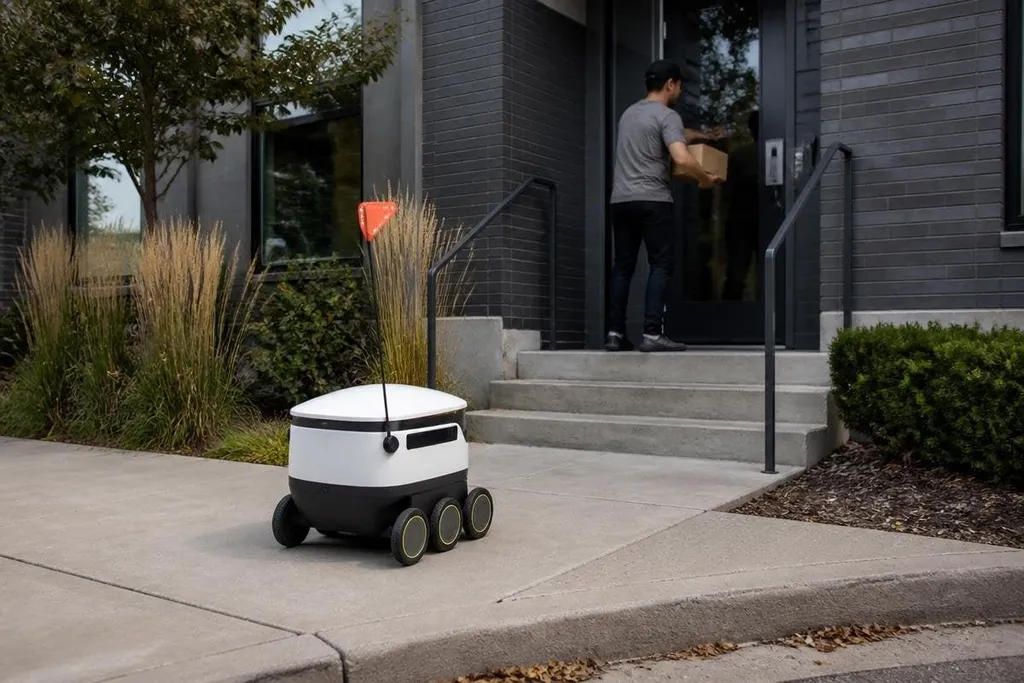
A delivery robot can carry a parcel across a sidewalk, but the hard part starts at the curb, the crosswalk, and the locked building door.
The next phase will depend less on robot shape and more on how well operators handle those small breaks in the route.
- Sidewalk travel is only one part of the delivery.
- Remote staff will still matter when a robot meets an unusual obstacle.
- Shared rules for roads, buildings, and public space will shape where robots can work.
The route is more than a map
Delivery robots use cameras, LiDAR, maps, and software to move through a planned area. LiDAR measures distance with light, helping the robot spot objects that a camera may miss in poor conditions.
That works well when the path stays clear. A parked vehicle, roadwork sign, crowd, fallen branch, or narrow entrance can change the task. The robot then needs a safe way to stop, wait, ask for help, or choose another route.
This is why future systems will need strong links between the robot and a remote operator. The operator may not control every metre of travel. They may step in only when the robot reaches a place its software cannot read with enough confidence.
The last few metres remain hard
A robot can reach a building and still fail to complete the delivery. Stairs, lifts, doors, intercoms, security desks, and apartment hallways all bring different rules and layouts.
The answer may be a handoff. A robot could take a parcel to a collection point, where a person or another system finishes the job. That adds work, but it may fit older buildings better than a robot built to enter every property.
Door access will need clear ownership. A building manager might give a robot temporary access, while a resident confirms receipt through an app or a code. Each extra step adds time and creates another place for a delivery to stop.
That handoff changes the test. A delivery robot has to reach the door and record the parcel exchange. It also needs a plan for a blocked entrance or missing recipient. Dated delivery robot reports from Robot24.com can tie those claims to named machines, trial sites, and test dates before the article turns to the people who still manage the work.
People and machines will share the work
Remote support will remain part of many delivery networks. A person can check a blocked path, speak with a pedestrian, or confirm that a parcel is at the correct entrance.
That changes the cost of each trip. If one operator can support several robots during normal travel, the system may fit more delivery routes. If every unusual event needs long attention, the labour cost stays high.
Safety will shape public acceptance too. The robot must give people room, stop when its sensors are blocked, and make its next move clear. Local rules may set limits for speed, weight, parking, and access to public paths.
Privacy also needs a clear answer. Cameras that help a robot move can record people, homes, and vehicles. Operators will need rules for what the robot stores, how long it keeps that data, and who can view it.
What could slow adoption
Delivery robots face practical limits that a clean test route can hide. Rain, snow, poor lighting, road repairs, crowded pavements, and damaged kerbs all change the work.
The business case has another limit: a robot needs enough suitable deliveries on its route. If staff must reload it, guide it around blocked areas, recover it after a fault, and handle every building entrance, the service may cost more than a van or bicycle courier.
I'd wait for operators to publish route results across different weather and building types before treating delivery robots as a broad replacement for couriers.
A buying and deployment checklist
Before a retailer, carrier, or property manager starts a trial, check these points:
- Define the route: list every curb, crossing, entrance, and handoff point.
- Set the fallback: decide who receives an alert when the robot stops.
- Check building access: test doors, lifts, intercoms, and parcel rooms.
- Measure staff time: record remote support and recovery work, not only travel time.
- Set data rules: state what cameras record and when those files are deleted.
- Publish the limits: tell customers where the service works and where it does not.
The next useful proof will come from repeat service on ordinary routes, with clear records of stops, handoffs, remote help, weather, and failed deliveries. Until those records are public, delivery robots look best as a focused tool for defined routes rather than a replacement for the whole delivery network.